
In the design of self-expanding stents, catheter delivery systems, and other minimally invasive devices, the Austenite Finish temperature (Af) of Nitinol is arguably the most critical parameter. It dictates the temperature at which the material completes its transformation to austenite and exhibits its full superelastic, shape-memory behavior.
However, ZYTC Alloy frequently reviews material test reports (MTRs) from other mills where the Af temperature is measured solely on the raw ingot or billet. This is a dangerous practice. If your supplier only provides ingot Af data, your finished medical device could fail catastrophically. Here is why the Af temperature must be verified on the finished tube.

The Myth of “Chemistry Equals Properties”
It is a common misconception that if the chemical composition (e.g., 55.8 wt% Nickel) and the ingot Af temperature are correct, the finished tube will perform as expected.
The phase transformation temperature of Nitinol is not just a function of chemistry; it is heavily influenced by thermomechanical history.
How Tube Drawing Alters the Af Temperature
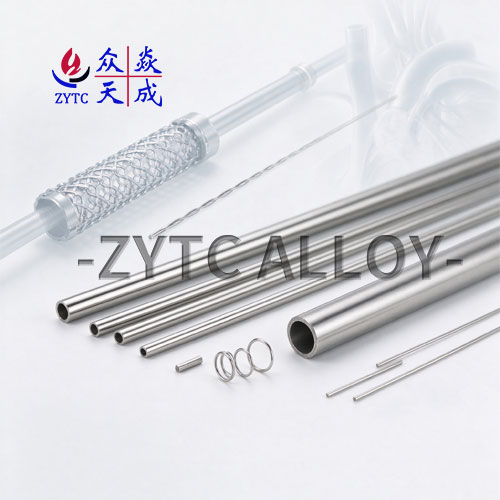
Transforming a thick Nitinol billet into a precision medical tube (e.g., 2.0 mm OD with a 0.2 mm wall thickness) involves multiple cycles of cold drawing, heat treatment (annealing), and sometimes intermediate stress-relief.
Every time the material is cold-worked, dislocations accumulate in the crystal lattice, introducing internal stress that suppresses the transformation temperature. Subsequent heat treatments are designed to recrystallize the material and recover the Af temperature. However, the strain introduced during tube drawing (tube sinking or plug drawing) is fundamentally different from the strain introduced during wire drawing or sheet rolling.
Because the tube undergoes complex wall reduction and concentricity control, the residual stress distribution across the wall thickness is non-uniform. If a supplier only measures the Af temperature of the ingot, they are ignoring the profound microstructural changes caused by the tube manufacturing process.
The Risks of Ingot-Only Verification
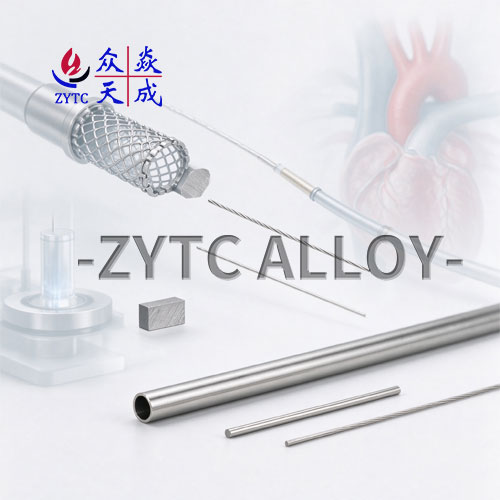
If you rely on ingot data, you are essentially guessing how the final device will behave. The risks include:
- Premature Deployment: If the finished tube’s Af is too low, the device may prematurely expand at room temperature during assembly or shipping, damaging the catheter sheath.
- Delivery Failure: If the Af is too high (due to excessive residual cold work), the stent may not fully expand at body temperature (37°C), leading to malapposition in the blood vessel.
- Fatigue Failure: Improper transformation temperatures often correlate with suboptimal microstructure, which can lead to early fatigue cracking under physiological loading.
ZYTC’s Solution: Dual-Phase Quality Assurance
At ZYTC Alloy, we believe that material verification must reflect the final application. For every batch of Nitinol tube we supply, we do not rely solely on ingot data. We have established a dual-phase quality assurance system that combines our comprehensive in-house laboratory with certified third-party testing.
1. Finished-Tube DSC Testing (via Certified Third-Party Labs)
We take precise cross-sectional samples from the finished, polished tube and send them to our certified partner laboratories for Differential Scanning Calorimetry (DSC) testing. They perform full heating and cooling cycles to determine the exact Af, As, Ms, and Mf temperatures. The measured Af is strictly compared against your specification (e.g., Af = 37°C ± 3°C). Every batch is shipped with a real DSC curve report.
2. Chemistry & Mechanical Verification (In-House Laboratory)
Simultaneously, our in-house laboratory strictly controls the physical and chemical parameters of every batch:
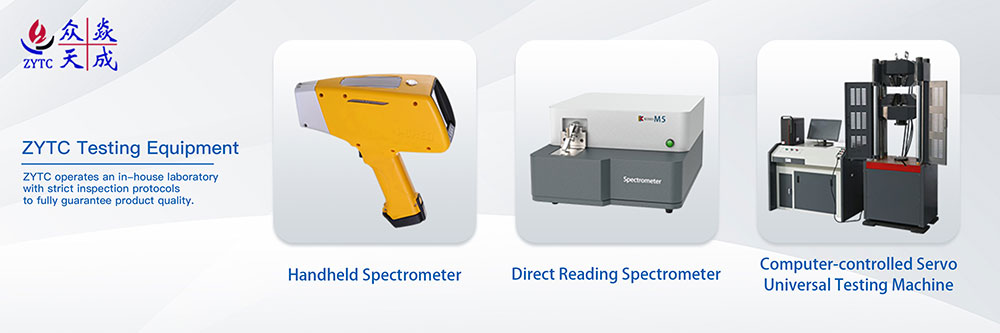
- Chemistry: Using our Direct Reading Spectrometer, we accurately verify the Nickel content (55.8 wt%) and trace impurities to ensure the base formulation is flawless.
- Microstructure: We use a Metallurgical Microscope (with Grain Size Analysis) to inspect the grain structure and residual stress state after drawing and annealing.
- Mechanical Properties: Our Computer-Controlled Servo Universal Testing Machine confirms the tensile and yield strength of the finished tubes to ensure they meet ASTM F2063 requirements.
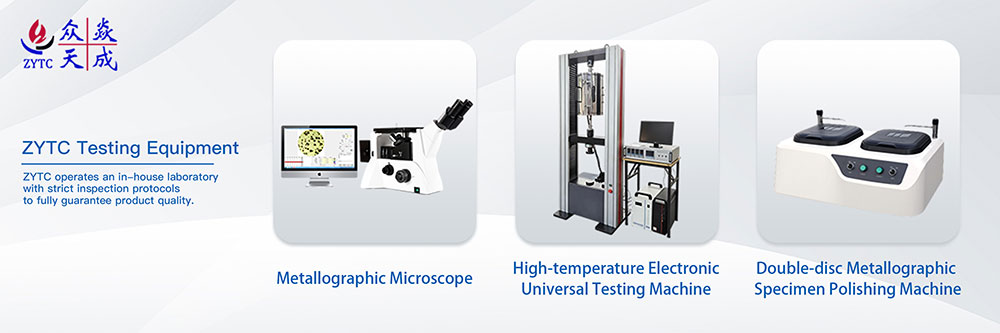
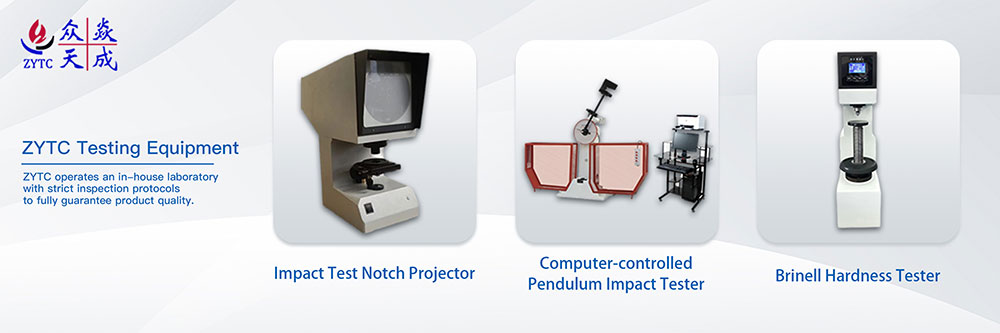
By combining finished-part DSC verification with in-house microstructural analysis, we guarantee that the material you receive is in the exact thermomechanical state required for your downstream laser cutting, electropolishing, and crimping processes.
Partner with a Supplier Who Understands Metallurgy
Don’t leave the performance of your life-saving devices to chance. If you are developing cardiovascular stents or delivery systems, ensure your material supplier provides Af verification on the finished product.
Looking for ASTM F2063 Nitinol tubes with verified finished-part Af temperatures? Contact our technical team today for samples and DSC testing reports.
📧 Email: daisy@zytcsteel.com
📞 Phone/WhatsApp: +86 17335753350