
410 stainless steel is specified for medical instruments that need a sharp edge, high wear resistance, and controlled hardness—not for implants. Its performance in a finished instrument depends less on the chemistry certificate and more on heat treatment control, residual austenite management, and carbide distribution. This guide explains what actually determines whether a 410 batch will produce a durable blade, and where the material’s limits lie.

Why 410 for Medical Instruments?
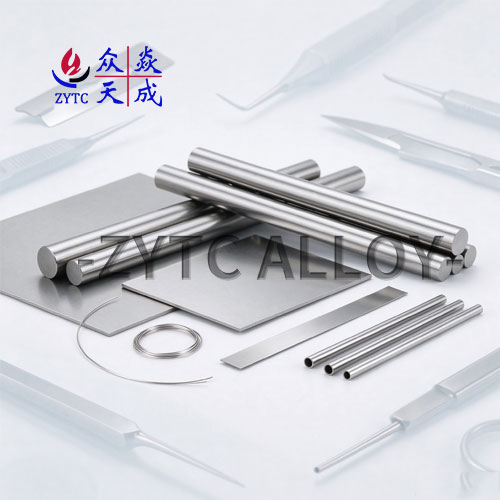
410 (UNS S41000) is a martensitic stainless steel with 11.5–13.5% chromium and 0.08–0.15% carbon. Unlike austenitic grades such as 316L, it is magnetic in both annealed and hardened conditions, and it can be hardened by heat treatment to achieve high hardness—making it suitable for cutting edges, gripping surfaces, and mechanically actuated components.
Key properties for instrument applications:
-
Hardenability: Through quenching and tempering, 410 can reach hardness levels above 50 HRC, which supports edge retention in repeated-use instruments.
-
Moderate corrosion resistance: Adequate for atmospheric exposure, mild chemicals, and standard sterilization cycles. Not intended for implant service or prolonged chloride-rich environments.
-
Magnetic: Advantageous where magnetic actuation, sorting, or detection is part of the device design.
-
Cost efficiency: For high-volume production of reusable or disposable instruments, 410 provides a more economical alternative to higher-alloyed martensitic grades.
Important boundary: 410 is a non-implantable material. For temporary implants, 316L is the standard choice; for long-term implants, titanium or cobalt-chromium alloys are required.
The Property That Matters Most: Residual Austenite Control
For 410 used in surgical blades and cutting instruments, hardness alone is not a sufficient acceptance criterion. The metallurgical feature that most directly affects long-term performance is retained austenite content after heat treatment.
Why it matters: If the quenching and tempering process leaves excessive retained austenite, that austenite can transform to martensite over time—particularly during repeated autoclave cycles. This transformation is accompanied by a volume change, which can cause dimensional drift in precision instruments, and a magnetic property change, which can affect instrument sorting or magnetic actuation.
What to specify: For critical cutting instruments, require the supplier to report retained austenite content (measured by X-ray diffraction or metallographic estimation) alongside hardness. A typical target for 410 instrument applications is to keep retained austenite below a level agreed with the instrument designer—commonly in the range of 5–10% by volume, depending on the required dimensional stability.
What to verify: Hardness (HRC) alone does not confirm that retained austenite is under control. If your instrument requires tight dimensional stability across sterilization cycles, ask for retained austenite data, not just a hardness number.
Grain Size and Carbide Distribution: The Edge Retention Factors
Two additional microstructural features affect how a 410 blade performs in service:
Grain size. Finer grain size generally improves toughness and edge stability. For cutting instruments, a fine and uniform grain structure reduces the risk of micro-chipping along the edge. Grain size can be measured per ASTM E112; for critical blade applications, specifying a grain size requirement (e.g., ASTM grain size 6 or finer) provides a meaningful quality control point.
Carbide distribution. 410’s carbon content (0.08–0.15%) forms chromium carbides during heat treatment. If carbides are coarse or unevenly distributed, they can act as stress concentrators and initiate micro-cracks during grinding or use. A uniform carbide distribution—verified by metallurgical microscopy—supports consistent edge quality.
What to verify: For blade applications, request metallurgical examination of grain size and carbide distribution, in addition to hardness. These are the microstructural features that determine whether the blade will hold an edge through repeated use, not just whether it passes a hardness test on the first day.
Technical Specifications (UNS S41000)
| Property / Specification | Value / Description |
|---|---|
| UNS Number | S41000 |
| AISI / WNR | 410 / 1.4006 |
| Material Type | Martensitic Stainless Steel |
| Magnetic Status | Magnetic (annealed and hardened) |
| Carbon Content | 0.08 – 0.15% |
| Chromium Content | 11.5 – 13.5% |
| Tensile Strength (hardened & tempered) | Typically 1,200–1,500 MPa, depending on tempering temperature |
| Hardness (hardened condition) | Typically 45–52 HRC, depending on tempering temperature |
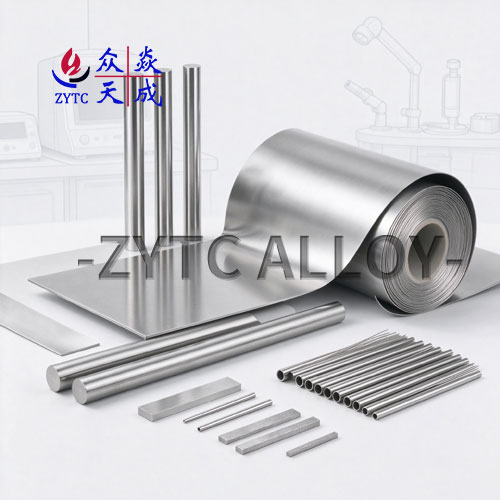
| Available Forms | Wire, bar, strip, custom profiles |
| Surface Finish | Bright, ground, polished |
Mechanical property values are typical for hardened and tempered 410 per ASTM A276 / A479. Actual values depend on section size and heat treatment; ZYTC provides batch-specific test data with every shipment.
Delivery States and Processing Guidance
The delivery state you specify determines the manufacturing route. ZYTC supplies 410 in three conditions:
Annealed: Best for machining and cold forming (stamping, bending). Hardness is low, ductility is high, and the material is ready for subsequent heat treatment after forming.
Cold worked: For components requiring higher tensile strength without thermal processing. Note that cold working introduces residual stress and may affect dimensional stability; stress-relief annealing may be required for precision parts.
Hardened and tempered: Ready for final grinding and edge sharpening. Specify the target hardness range and, if required, retained austenite limit. This condition is preferred when the instrument manufacturer does not have in-house heat treatment capability.
Processing note: 410 is prone to cracking during severe cold forming in the hardened condition. If your process involves forming after hardening, discuss the sequence with the supplier—forming in the annealed condition followed by heat treatment is generally more reliable.
When 410 May Not Be Sufficient
410 is a cost-effective choice for non-implantable instruments with moderate corrosion demands. However, there are conditions where a different grade should be evaluated:
-
Aggressive disinfectants or prolonged chloride exposure: 420 or 440C offer higher carbon and hardness, with somewhat better wear resistance; corrosion resistance remains moderate. For substantially better corrosion resistance at high hardness, a higher-chromium martensitic grade may be required.
-
Instruments requiring both high hardness and superior corrosion resistance: Consider a martensitic stainless with higher chromium content, or a precipitation-hardening grade such as 17-4 PH, depending on the required hardness and corrosion profile.
-
Long-term implant or high-load applications: 410 is not suitable. 316L, Ti-6Al-4V ELI, or cobalt-chromium alloys should be evaluated.
Selection guidance: If the instrument will be autoclaved repeatedly and must maintain precise dimensions, verify retained austenite control. If the instrument will be exposed to aggressive chemical disinfectants, evaluate a higher-chromium grade. If the primary requirement is edge retention at the lowest cost, 410 is the appropriate starting point.
How ZYTC Verifies 410 Before Shipment
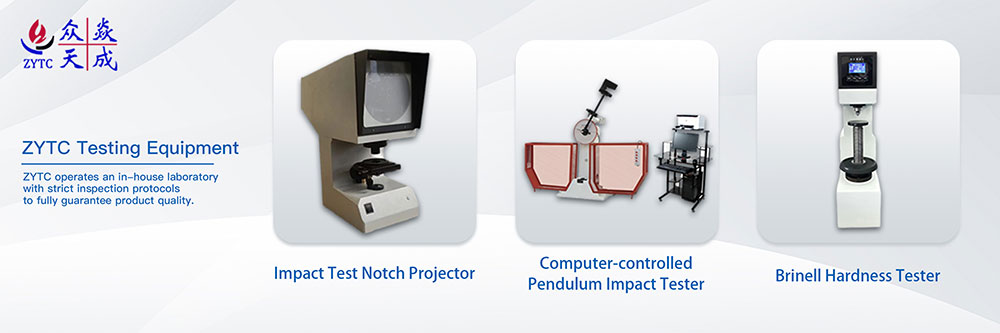
For 410 instrument materials, the acceptance criteria go beyond chemistry. ZYTC verifies every batch using:
-
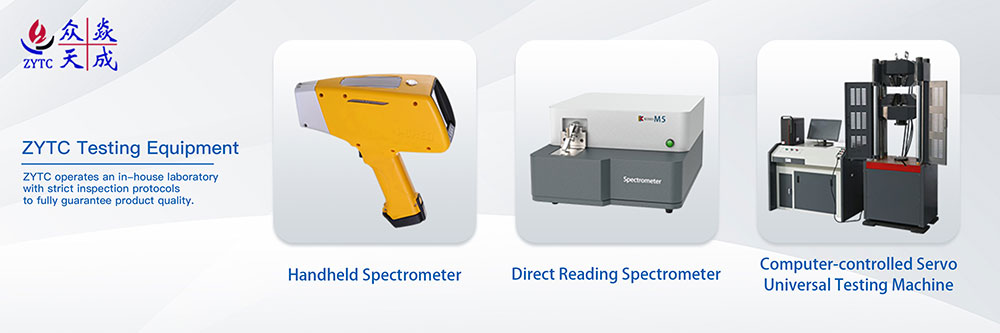
Direct Reading Spectrometry: Confirms carbon (0.08–0.15%) and chromium (11.5–13.5%) within the specified windows; carbon content directly affects hardenability and carbide formation.
-
Hardness Testing: Verifies the delivered condition meets the specified HRC range; for hardened and tempered material, hardness is measured after the final tempering step.
-
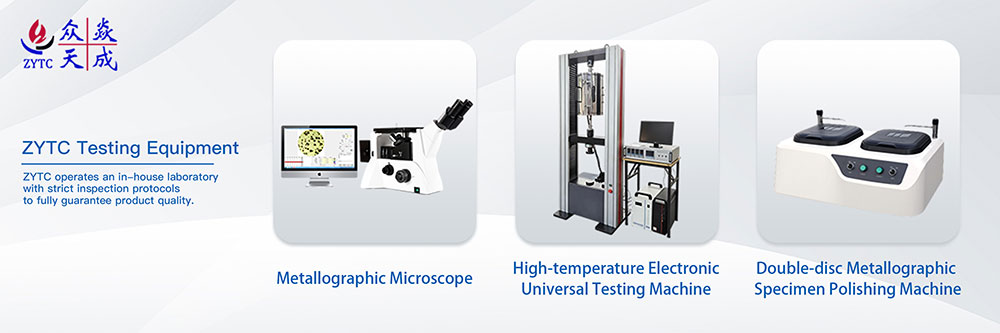
Metallurgical Microscopy: Evaluates grain size (per ASTM E112 on request) and carbide distribution, which affect edge retention and toughness.
-
Retained Austenite Testing (on request): For critical blade applications, X-ray diffraction or metallographic estimation can be provided to confirm retained austenite is within the agreed limit.
Typical Medical Applications
| Application Area | Specific Components | Why 410 |
|---|---|---|
| Surgical Blades | Scalpels, microtome blades, biopsy punches | High hardness and edge retention |
| Dental Instruments | Scalers, curettes, extraction forceps | Hardness plus moderate corrosion resistance |
| Orthopedic Tools | Bone cutters, chisels, forceps | Wear resistance under mechanical load |
| Medical Fasteners & Springs | Components requiring magnetic properties or high tensile strength | Magnetic behavior and hardenability |
Request a Quote
To receive a material recommendation and a quotation with full test documentation, please provide:
-
Application: Blade, gripping instrument, orthopedic tool, fastener, or other
-
Required form: Wire, bar, strip, or custom profile
-
Dimensions: Diameter, thickness, or width, with tolerances
-
Delivery state: Annealed, cold worked, or hardened and tempered
-
Hardness requirement: Target HRC range
-
Special requirements: Retained austenite limit, grain size, surface finish
-
Quantity (kg or meters)
-
Certification: EN 10204 3.1 MTR, with metallurgical examination data if required
📧 Email: daisy@zytcsteel.com
📱 WhatsApp/WeChat: +86 17335753350