
Medical Grade 316L is not simply “stainless steel with low carbon.” It is an austenitic alloy that must be verified for micro-cleanliness, inclusion content, and traceability before it can be safely used in surgical instruments, temporary implants, or fluid handling systems. This page explains what distinguishes medical-grade 316L from its industrial counterpart, and how ZYTC verifies every batch to meet ASTM F138 / F139 and ISO 5832-1 requirements.
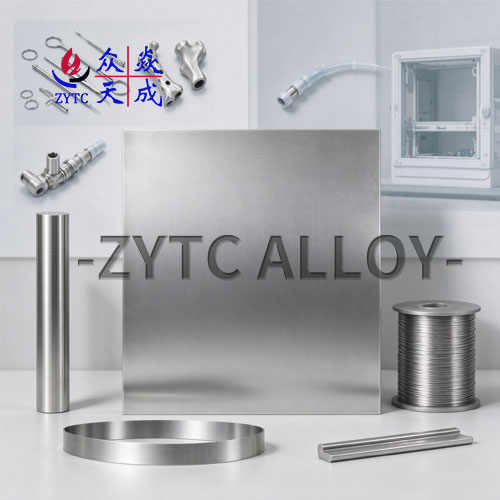

Why 316L for Medical Applications?
316L (UNS S31603) is an extra-low-carbon austenitic stainless steel widely specified for medical devices due to its balance of corrosion resistance, formability, and cost. The “L” designation (carbon ≤0.035%) is critical: it minimizes the risk of chromium carbide precipitation during welding or high-temperature processing, which would otherwise deplete the chromium available for the passive layer and lead to intergranular corrosion.
Key properties for medical use:
-
Chloride resistance: The 2–3% molybdenum addition provides resistance to pitting and crevice corrosion in chloride-rich environments, including saline solutions and bodily fluids.
-
Hypoallergenic: The metallurgical composition minimizes adverse tissue reactions, making 316L suitable for temporary implants and surgical instruments.
-
Non-magnetic (annealed state): Fully annealed 316L is non-magnetic, ensuring compatibility with sensitive medical equipment. Note: severe cold working can introduce slight magnetism.
-
Formability: Despite its strength, 316L can be formed into complex medical components without cracking, including small-radius bends.
The Critical Difference: Industrial 316L vs. Medical-Grade 316LVM
This is the distinction that matters most for procurement. A mill certificate showing “316L” chemistry does not confirm that the material is suitable for medical use.
| Parameter | Industrial 316L | Medical-Grade 316L / 316LVM |
|---|---|---|
| Melting process | Standard electric arc or AOD | Vacuum induction melting (VIM) and/or vacuum arc remelting (VAR) for implant grades |
| Sulfur content | Up to 0.030% (added for machinability) | Significantly lower; sulfur is an inclusion former that affects fatigue life and corrosion resistance |
| Inclusion content | Not specifically controlled | Tightly controlled; verified by metallurgical microscopy per ASTM E45 |
| Traceability | Mill certificate | Full traceability from melt heat number to finished product, with EN 10204 3.1 MTR |
| Governing standards | ASTM A276 / A479 | ASTM F138 / F139, ISO 5832-1 |
Procurement implication: If your application involves body contact—even temporary—specify the medical-grade standard and require inclusion rating data. A chemistry certificate alone does not confirm micro-cleanliness.
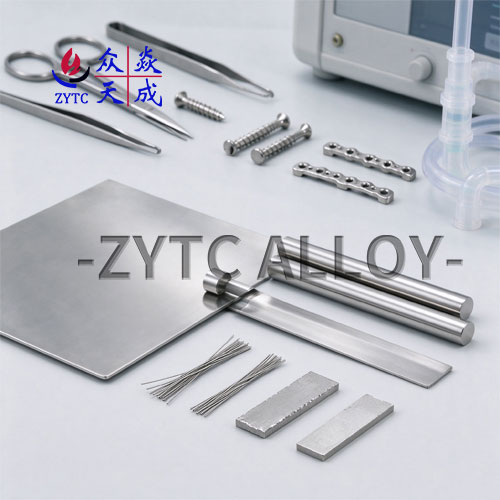
Chemical Composition & Mechanical Properties
Chemical Composition (Weight %, per ASTM F138 / F139)
| Element | Content (%) | Function in Medical Alloys |
|---|---|---|
| Carbon (C) | ≤ 0.030 | Minimizes carbide precipitation; prevents sensitization |
| Chromium (Cr) | 17.0 – 19.0 | Forms the passive layer for corrosion resistance |
| Nickel (Ni) | 13.0 – 15.0 | Stabilizes austenitic structure; enhances ductility |
| Molybdenum (Mo) | 2.25 – 3.00 | Enhances pitting and chloride resistance |
| Manganese (Mn) | ≤ 2.00 | Improves hot working properties |
| Silicon (Si) | ≤ 0.75 | Oxidation resistance |
| Phosphorus (P) | ≤ 0.025 | Impurity control |
| Sulfur (S) | ≤ 0.010 | Controlled low for improved micro-cleanliness |
| Iron (Fe) | Balance | Matrix |
Note: For 316LVM (vacuum melted), sulfur is typically held at ≤0.010% or lower to improve inclusion cleanliness. Confirm the exact sulfur limit with your supplier against the applicable standard.
Mechanical Properties (Annealed Condition, Typical)
| Property | Value |
|---|---|
| Tensile Strength | ≥ 485 MPa |
| Yield Strength (0.2% offset) | ≥ 170 MPa |
| Elongation | ≥ 40% |
| Hardness | ≤ 95 HRB |
| Modulus of Elasticity | ~193 GPa |
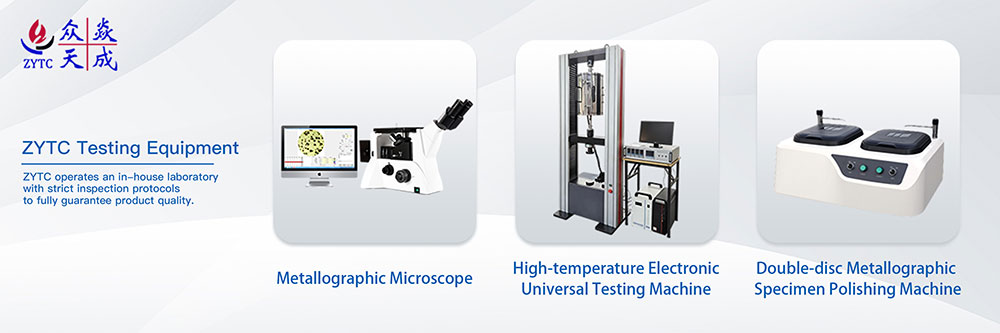
How ZYTC Verifies Medical-Grade 316L Before Shipment
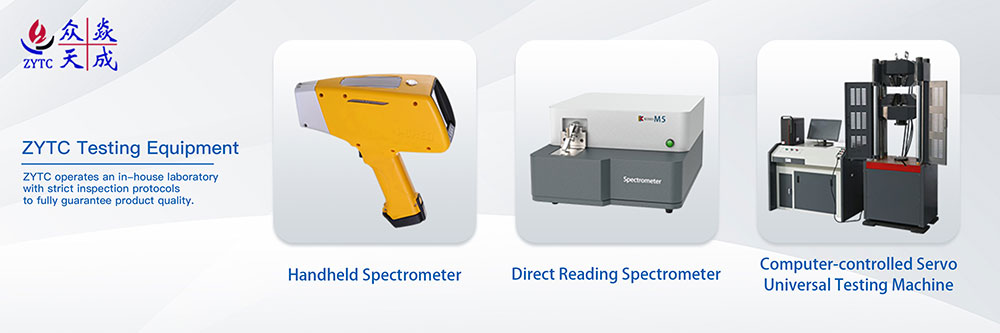
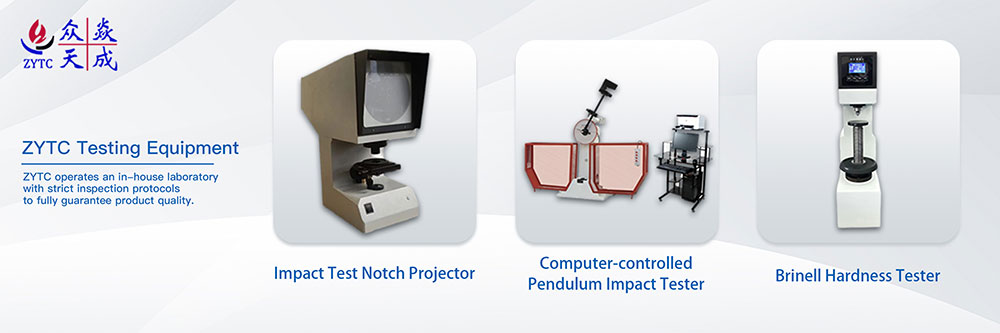
For medical-grade stainless, the difference between a compliant batch and a failed batch often comes down to factors that chemistry alone cannot reveal. ZYTC verifies every batch using:
-
Direct Reading Spectrometry: Confirms carbon at ≤0.030%, chromium and molybdenum within the specified windows, and monitors residual impurities that affect biocompatibility and corrosion resistance.
-
Metallurgical Microscopy (ASTM E45 Inclusion Rating): Evaluates oxide and sulfide inclusion content, which directly affect fatigue life in implant and instrument applications.
-
Mechanical Testing: Universal testing machine verification of tensile and yield strength to confirm the annealed condition meets ASTM F138 / F139 requirements.
-
Surface Inspection: Checks for oxidation, scale, or drawing lubricant residue that could affect subsequent processing or sterilization.
Typical Medical Applications
| Application Area | Specific Components | Why 316L |
|---|---|---|
| Surgical Instruments | Forceps, scissors, clamps, retractors | Corrosion resistance to autoclave cycles; formability |
| Temporary Implants | Bone screws, plates, pins | Biocompatibility; adequate strength for short-term implantation |
| Medical Equipment | Fluid handling systems, catheter connectors, device housings | Chloride resistance; cleanability |
| Orthopedic Supports | External braces, durable components | Strength and corrosion resistance at moderate cost |
When 316L may not be sufficient: For long-term implantation, high-load orthopedic implants, or applications requiring superior fatigue resistance, alternative materials such as Ti-6Al-4V ELI (ASTM F136) or MP35N (ASTM F562) should be evaluated. 316L is typically specified for temporary implants and instruments, not permanent load-bearing implants.
Cost-Effectiveness & Material Selection
316L occupies a middle position in the medical stainless steel hierarchy. It is more expensive than 303 or 304 (which are suitable for non-patient-contact components) but significantly less costly than cobalt-chromium alloys or titanium. For applications requiring chloride resistance and biocompatibility without the premium of implant-grade titanium, 316L provides an optimal cost-to-performance ratio.
Selection guidance:
-
Non-patient contact: 304 or 303 may be sufficient.
-
Temporary implants and instruments: 316L / 316LVM is the standard choice.
-
Long-term implants or high-load applications: Consider Ti-6Al-4V ELI or MP35N.
Request a Quote
To receive a material recommendation and a quotation with full test documentation, please provide:
-
Application: Surgical instrument, temporary implant, fluid handling, or other
-
Required form: Wire, bar, strip, sheet, or tube
-
Dimensions: Diameter, thickness, or width, with tolerances
-
Standard: ASTM F138, ASTM F139, ISO 5832-1, or other
-
Quantity (kg or meters)
-
Certification: EN 10204 3.1 MTR with inclusion rating data (if required)
📧 Email: daisy@zytcsteel.com
📱 WhatsApp/WeChat: +86 17335753350