
From orthopedic bone plates and surgical instrument housings to pacemaker titanium casings and dental frameworks, medical alloy sheets are the foundation of countless life-saving devices.
While many engineers are highly familiar with the metallurgy of medical alloys (such as Ti-6Al-4V ELI or 316LVM), the transition from a flat sheet to a finished device often introduces unexpected manufacturing challenges. Formability, springback control, edge quality, and surface integrity are not just manufacturing details—they directly impact the fatigue life and biocompatibility of the final implant.
In this guide, we explore the critical engineering considerations when specifying and forming medical alloy sheets, and how partnering with a lab-backed supplier mitigates your production risks.

Part 1: Choosing the Right Sheet Material
When specifying a medical sheet, the choice is usually narrowed down to three dominant material families:
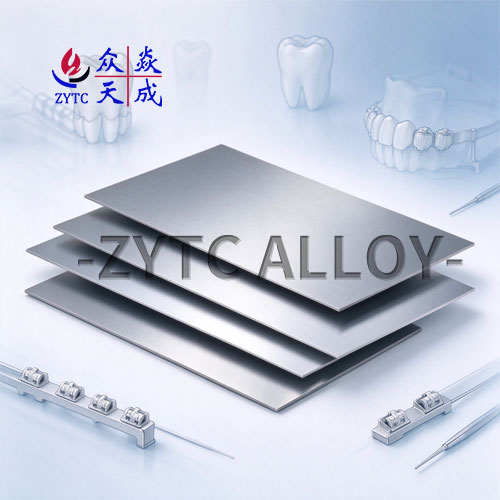
1. Titanium Sheets (Ti-6Al-4V ELI – Grade 23)
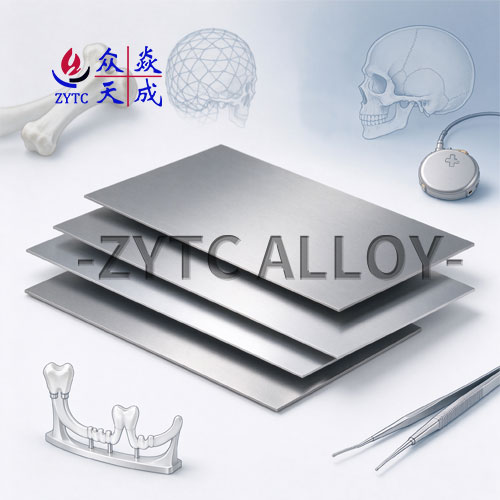
- Application: Bone plates, cranial mesh, pacemaker casings.
- The Challenge: Excellent biocompatibility and high strength-to-weight ratio. However, titanium has a low elastic modulus and tends to “spring back” during cold forming. Working with the ELI (Extra Low Interstitial) grade is essential for achieving the ductility required for bending without cracking.
2. Medical Stainless Steel (316LVM – ASTM F138)
- Application: Surgical instruments, temporary fixation plates, orthodontic brackets.
- The Challenge: 316LVM (Vacuum Arc Remelted) offers excellent corrosion resistance and formability. Its main challenge lies in maintaining the ultra-low inclusion content required to prevent pitting corrosion and ensuring the sheet is free of surface decarburization.
3. Cobalt-Chromium Alloys (CoCrMo – ASTM F1537 / F75)
- Application: High-wear components, dental prosthetics.
- The Challenge: Exceptional hardness and wear resistance, but notoriously difficult to cold-form. CoCrMo sheets are typically used in applications requiring minimal forming, or are shaped via laser cutting and grinding.
Part 2: The Engineering Challenges of Forming Medical Sheets
Turning a flat medical alloy sheet into a functional device requires strict process control.
- Springback Control: Medical implants require sub-millimeter precision. Because titanium and stainless steel have high yield strengths, they exhibit significant elastic recovery (springback) after bending. Tooling must be over-bent to compensate.
- Heat Management: Processes like laser cutting or welding can create localized heat-affected zones (HAZ). For titanium, this can cause oxygen pickup and alpha-case formation, compromising the implant’s fatigue resistance and biocompatibility.
- Surface Integrity: The surface of a medical sheet is a biological interface. It must be completely free from micro-cracks, embedded foreign particles, or decarburization. The sheet must be suitable for subsequent electropolishing or passivation.
Part 3: Partnering with a Lab-Backed Supplier: ZYTC Alloy
When sourcing medical alloy sheets from overseas, the “Certificate of Analysis” is just the starting point. You need a supplier that verifies the microstructural integrity of the sheet before it reaches your stamping press.
How ZYTC Alloy Supports Medical Device Manufacturing
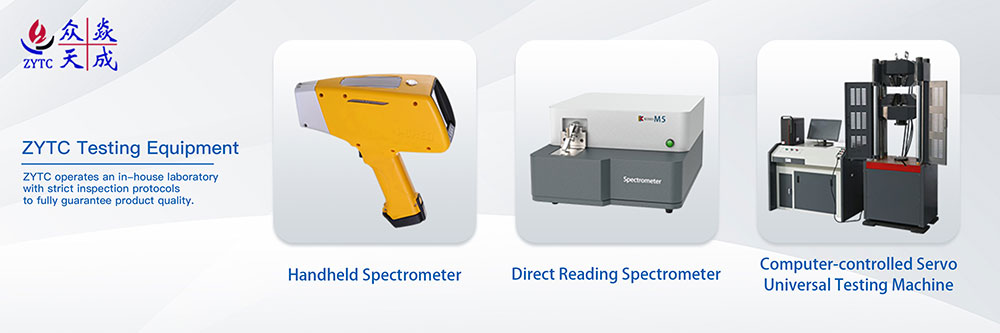
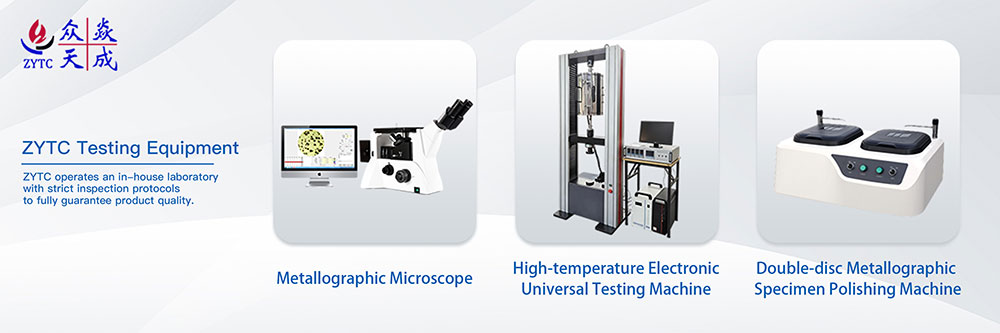
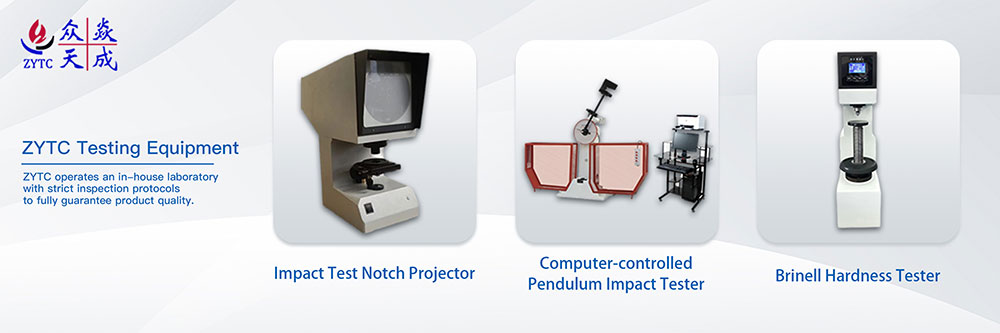
As a leading Chinese supplier of medical-grade materials, ZYTC Alloy operates a fully equipped in-house laboratory. We supply precision medical alloy sheets with complete traceability and verified properties:
- In-House Verification:
- Direct Reading Spectrometer: Verifies precise chemistry, including trace interstitial elements (C, N, O) in Ti-6Al-4V ELI to ensure ductility.
- Metallurgical Microscope: Inspects the grain size and microstructure of the sheet, ensuring it has been properly annealed for optimal forming behavior.
- Mechanical Testing: Verifies tensile and yield strength in the delivered condition.
- Available Medical Sheet Materials:
- Ti-6Al-4V ELI (Grade 23)
- 316LVM Stainless Steel (ASTM F138)
- Commercially Pure Titanium (Grade 2 / Grade 4)
- Custom Finishing: We offer precision slitting, cut-to-length, and surface pickling/passivation to meet your exact fabrication requirements.
Specifying medical alloy sheets is about understanding the intersection of metallurgy and manufacturing. By choosing the right material state and partnering with a supplier that verifies its microstructure, you can ensure your devices meet the highest standards of safety and performance.
Ready to start your next project?
ZYTC Alloy provides custom medical sheet solutions, from prototype samples to bulk production. Send us your specifications (Material Grade, Thickness, Temper, and Surface Finish) for a quote.
📧 Email: daisy@zytcsteel.com
📱 WhatsApp/WeChat: +86 17335753350