
Three standards, one alloy family, two process routes.
CoCrMo is the default bearing and structural alloy for hip and knee implants, and almost every specification conversation about it comes down to three documents: ASTM F75, ASTM F1537, and ISO 5832-12. They describe the same alloy family produced by different routes, and the differences between them are manufacturing differences, not cosmetic ones.

The Comparison
| Standard | Route | Carbon | Yield (MPa) | Where it belongs |
|---|---|---|---|---|
| ASTM F75 (cast) | Investment cast, optional HIP | 0.35 max | 450 min | Knee tibial trays, complex geometries, porous bearing surfaces |
| ASTM F1537 Alloy 1 | Wrought, low carbon | 0.14 max | 600–800 | Forged stems, fracture plates, parts needing toughness |
| ASTM F1537 Alloy 2 | Wrought, high carbon | 0.15–0.25 | 700–900 | Bearing surfaces, femoral heads, articulating components |
| ISO 5832-12 (CoCr28Mo) | Wrought | Per alloy class | 600–900 | The ISO counterpart of F1537; used in EU dossiers |
| Phynox (F1058, 2.4711) | Wrought, Co-Cr-Ni | 0.15 max | 1,500+ cold worked | Springs, guidewires, stylets — not bearing surfaces |
Cast vs. Wrought: It’s a Design Decision, Not Just Procurement
F75 is investment cast. The advantage is geometry: a knee tibial tray with undercuts, ribs, and porous surfaces can be cast close to final shape, which is difficult to forge. The disadvantage is that casting produces porosity, and porosity is where fatigue cracks start.
Hot isostatic pressing (HIP) closes that gap. HIP’d F75 is the normal specification for load-bearing cast parts, and a supplier that offers F75 without stating the HIP condition is offering half a specification. The mechanical property values in F75 (450 MPa yield, 8% elongation) assume a sound, HIP’d casting.
Carbon: The Variable That Sets Wear Against Toughness
F1537 splits into Alloy 1 and Alloy 2 by carbon content, and that single number decides the application. Carbon forms carbides; carbides resist wear but also act as crack initiation sites.
- Alloy 1 (0.14% C max): Has fewer and finer carbides. It has better ductility and fatigue resistance, which is exactly what a forged femoral stem needs—the stem carries bending loads for twenty years and must not start a crack.
- Alloy 2 (0.15–0.25% C): The bearing grade. The higher carbide content is what gives CoCrMo its wear performance against polyethylene or a ceramic counterface; that is the reason it has been the metal-on-metal and metal-on-poly bearing of choice for decades.
Specifying Alloy 1 for a bearing surface, or Alloy 2 for a stem, is a common and expensive error. The two are often sold under the same generic name, and a certificate that says only “CoCrMo” does not tell you which you received.
ISO 5832-12 and the EU Market
ISO 5832-12 is the wrought CoCrMo standard used in European technical documentation. Chemically it sits alongside F1537, and in practice, the two are often satisfied by the same mill product. The difference that matters is paperwork: a notified body reviewing an EU technical file wants to see ISO 5832-12 conformance, while a US 510(k) submission requires ASTM F1537.
Buying a dual-certified heat avoids the situation where a device is approved in one market and cannot be shipped into the other without a new mill certificate.
Phynox: Same Family, Different Job
Phynox (UNS R30003, 2.4711) is a cobalt-chromium-nickel alloy, not a CoCrMo bearing alloy. It is included here because purchasing teams often group all cobalt alloys together, and that grouping causes mistakes.
Phynox is a spring and wire alloy: cold-worked, it reaches yield strengths above 1,500 MPa, holds its modulus across temperature, and resists corrosion. It belongs in guidewires, stylets, and small springs—not in a hip bearing, where its wear behavior and hardness do not match the design assumptions.
📋 Five Things to Put on the Purchase Order
To avoid receiving the wrong material or a half-finished process, put these five points in your PO:
- Standard and Alloy Class: Specify “F1537 Alloy 1” or “F1537 Alloy 2”. Never write just “CoCrMo”.
- HIP Condition: For cast parts, specify “HIP’d and verified”, with the process parameters stated on the certificate.
- Carbon as a Measured Value: It is the primary property that distinguishes the two wrought classes.
- Grain Size and Carbide Distribution: For bearing surfaces, microstructure is part of the specification.
- Form and Condition: Bar, forging stock, or finished casting, with the delivered condition (e.g., annealed, cold worked) clearly stated.
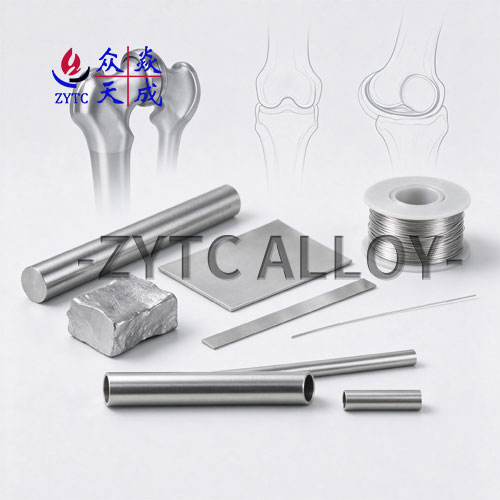
Supply and Verification at ZYTC Alloy
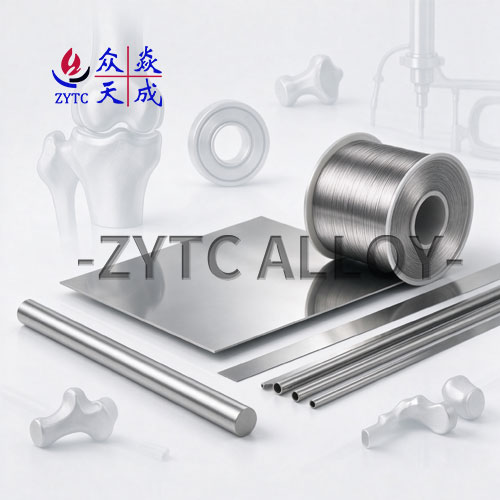
ZYTC Alloy supplies F75 cast stock and HIP services, F1537 Alloy 1 and Alloy 2 bar and forging stock, ISO 5832-12 wrought product, and Phynox wire and bar.
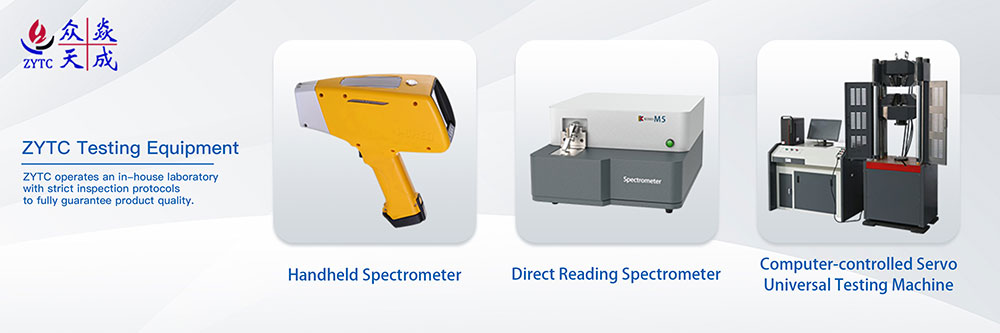
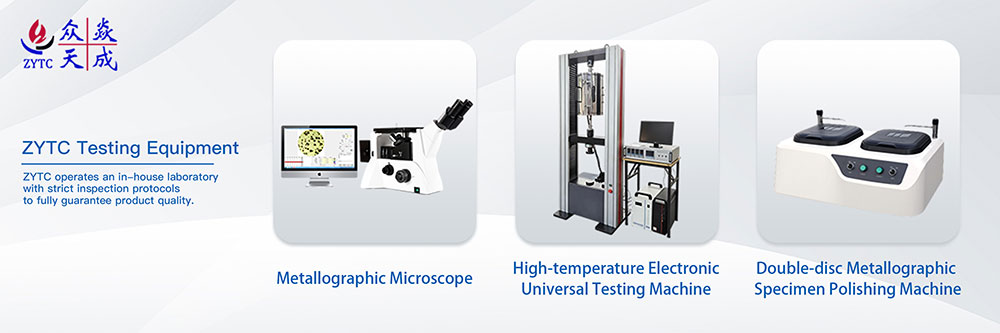
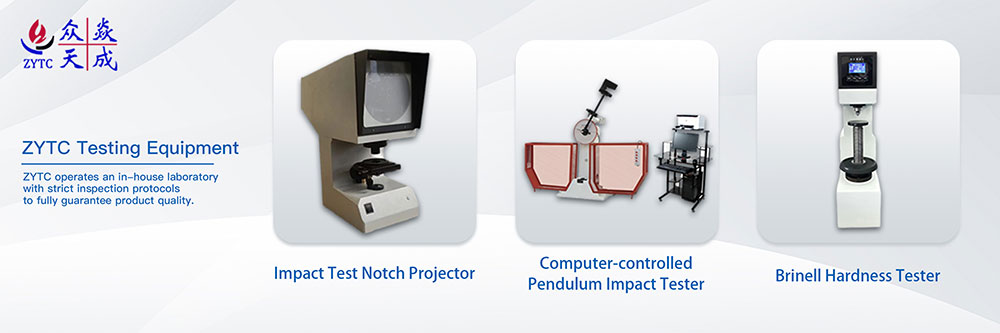
To ensure your material meets design intent, we verify every batch in our in-house laboratory:
- Direct Reading Spectrometry: Verifies Carbon, Chromium, and Molybdenum to distinguish Alloy 1 from Alloy 2.
- Universal Testing Machine: Confirms the yield and tensile strength for both cast and wrought conditions.
Request a Quotation
Send us the standard, alloy class, form, size, and HIP requirement. We will confirm mill certification and carbon analysis before quoting.
📧 Email: daisy@zytcsteel.com
📱 WhatsApp/WeChat: +86 17335753350